Blog
In-depth, fact-checked space journalism
 CosmosIn60
In-depth, fact-checked space journalism
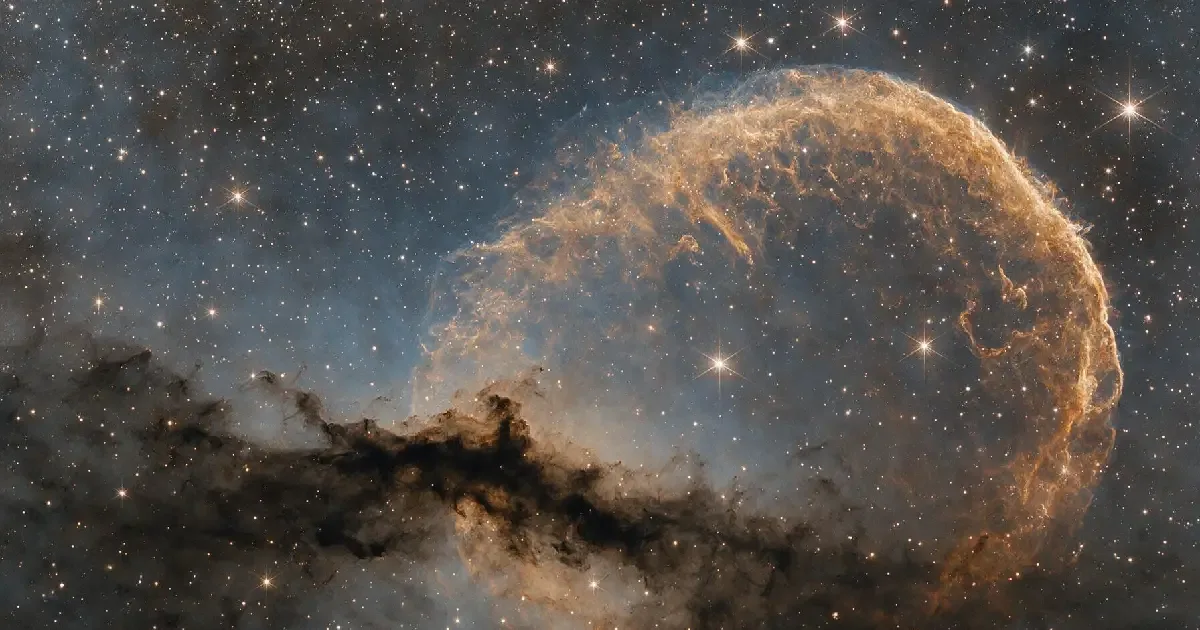
Kepler's supernova of 1604 was the last one anyone saw in the Milky Way, but not the last to explode. Here is how dust hid others, and how the next one will be caught.
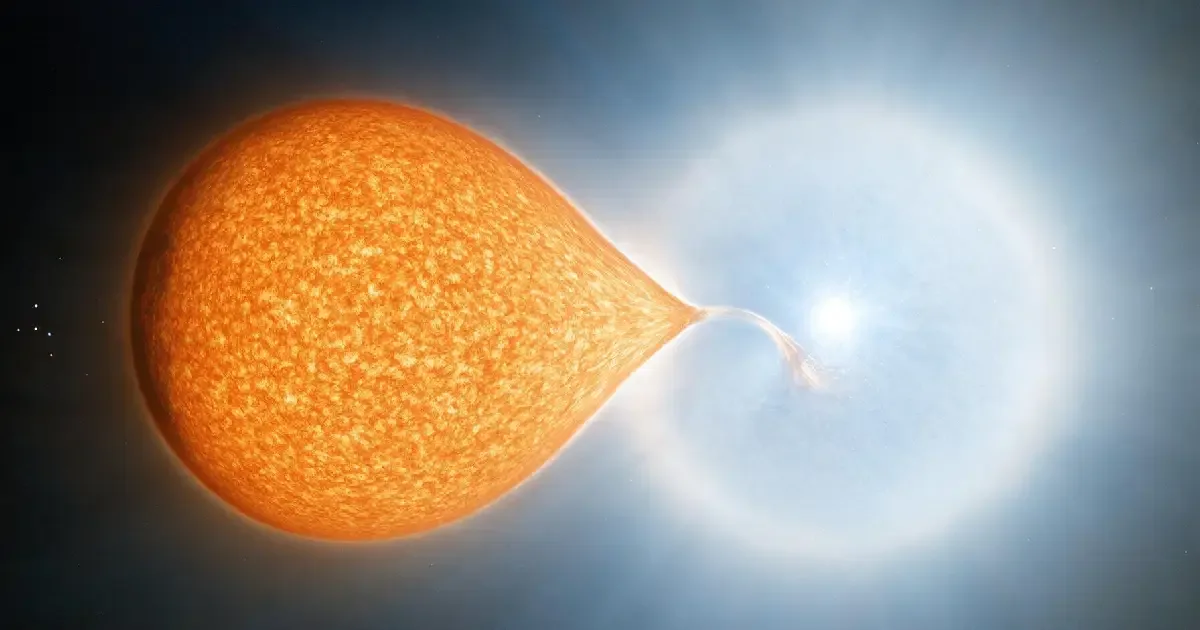
Algol dims every 2.87 days, but its real puzzle is stranger: the lighter star is the older one. Here is how a star gave its mass away and flipped the rules of stellar aging.
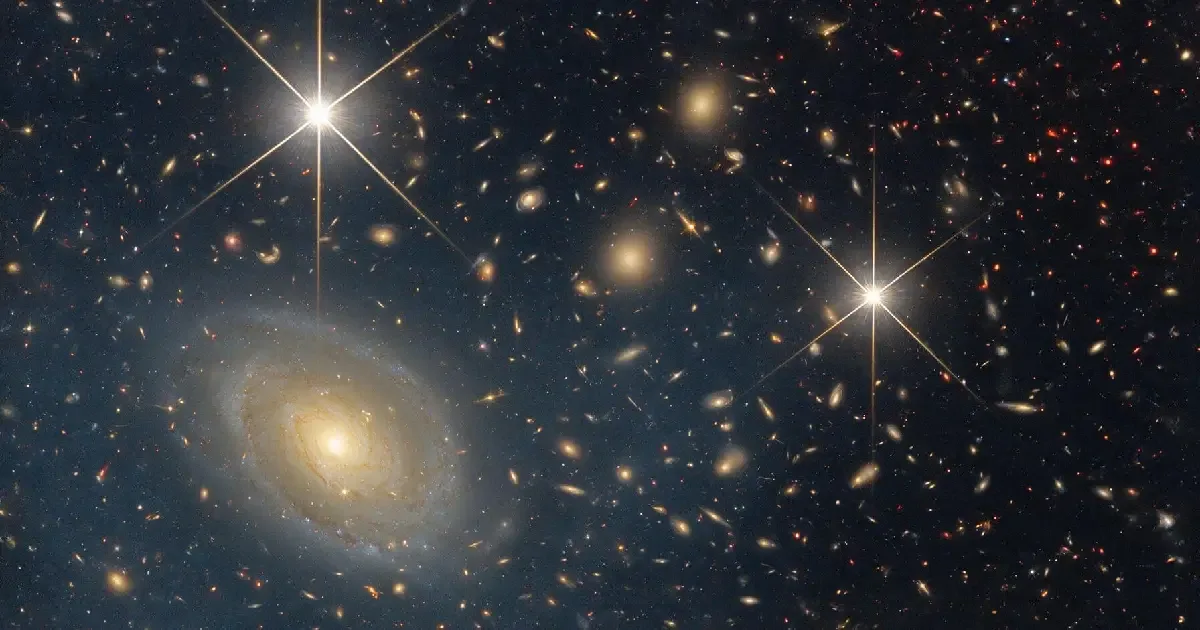
The night sky is dark mainly because the universe has a finite age, not because the Sun set. The blazing sky an infinite universe would give us is still there, stretched into invisible microwaves.

On August 12, 2026, the Moon's shadow crosses Greenland, Iceland and northern Spain. Here is where totality falls, the verified times, and the one safety rule that matters.

In 1859 a solar storm set telegraph wires on fire and lit auroras over the tropics. The unsettling part is how much more we have to lose if it happens again.

On July 17, 2026, a 3-day-old crescent Moon pairs with brilliant Venus in the western twilight. They look like neighbors. They are separated by 139 million kilometres.

The final supernovae in cosmic history may be frozen stellar corpses detonating after 10^1100 years — if the proton turns out to be stable. Here's the open case.

A supergiant in Andromeda dimmed 10,000-fold and disappeared with no supernova. The numbers behind this 'failed supernova' point to a black hole born in silence.

JWST built the sharpest map yet of the universe's invisible dark matter scaffolding. Here's what it actually shows, what the headlines got wrong, and why depth beat width.

The particles drilling through your body right now didn't come from the Sun. They were flung out of exploding stars that died before humans existed — and they only survive the trip because of Einstein.

A radio burst arrived with nine evenly spaced peaks, like a cosmic metronome. The obvious explanation was a transmitter. The real one is far stranger — and entirely natural.

The Big Rip predicts dark energy will one day shred galaxies, planets, and atoms. But it is the least-supported cosmic fate — and 2025 data points the other way.

Shrink the Sun to a 0.5mm grain of sand and Proxima Centauri sits roughly 9 miles away — yet the space between them contains almost nothing. Here's what that tells us about cosmic emptiness.

A YouTuber building a replica helped scientists crack the Antikythera mechanism's last great mystery. Here's what the 2,000-year-old eclipse computer can now tell us.

In 1925, Cecilia Payne proved stars are mostly hydrogen. The most powerful astronomer of the era told her she was wrong. It took four years for science to catch up.

One galactic year ago — 225 million years back — the Sun occupied this exact region of the Milky Way. On Earth, the first dinosaurs had just taken their first steps.

Gamma Cassiopeiae blazed with X-rays 40 times stronger than expected for half a century. In 2026, the XRISM space telescope finally unmasked the hidden culprit: a ravenous white dwarf.

Around 42,000 years ago, Earth's magnetic field dropped to just 5% of its current strength. Here's what happened to the planet — and to us.

The observable universe spans 93 billion light-years, yet is only 13.8 billion years old. Here's the physics that resolves this mind-bending contradiction.

HD 140283, nicknamed the Methuselah Star, has an age that rivals — and may slightly exceed — the universe itself. Here's how that's possible and what it tells us about cosmic history.

JWST data suggests LHS 1140b may be a nitrogen-rich water world with a liquid ocean — making it the most promising habitable-zone exoplanet ever found.

NASA's James Webb Space Telescope captured the sharpest image ever taken around a black hole, revealing that 87% of the hot dust near the Circinus Galaxy's core is being consumed — not blown away.

Red giants are among the most extreme environments in the universe. Here's the physics of what would actually happen if you crossed into one — layer by layer.

The James Webb Space Telescope is finding black holes in the early universe so massive they outweigh their entire host galaxies — and nobody fully knows how.

White dwarfs are caught consuming their own planetary systems at an alarming rate. New JWST data reveals exactly how it happens — and confirms Earth faces the same fate in 5 billion years.

Every May, Earth slices through the debris trail of Halley's Comet, igniting one of the fastest meteor showers of the year. Here's the science behind the Eta Aquariids.

A Jupiter-sized planet orbiting a tiny M-dwarf star defies everything we know about planet formation — and JWST's atmospheric findings make it even stranger.

NASA's Roman Space Telescope shares Hubble's mirror size but captures 100 times more sky in a single shot — poised to map a billion galaxies and reshape what we know about dark energy.

The Lyrids have blazed across April skies for 2,700 years — and most people have never heard of them. Here's the remarkable story behind the oldest recorded meteor shower still active today.

Neutron stars pack more mass than our Sun into a city-sized ball. One teaspoon of their material weighs around 6 billion tons — here's why that number is real.