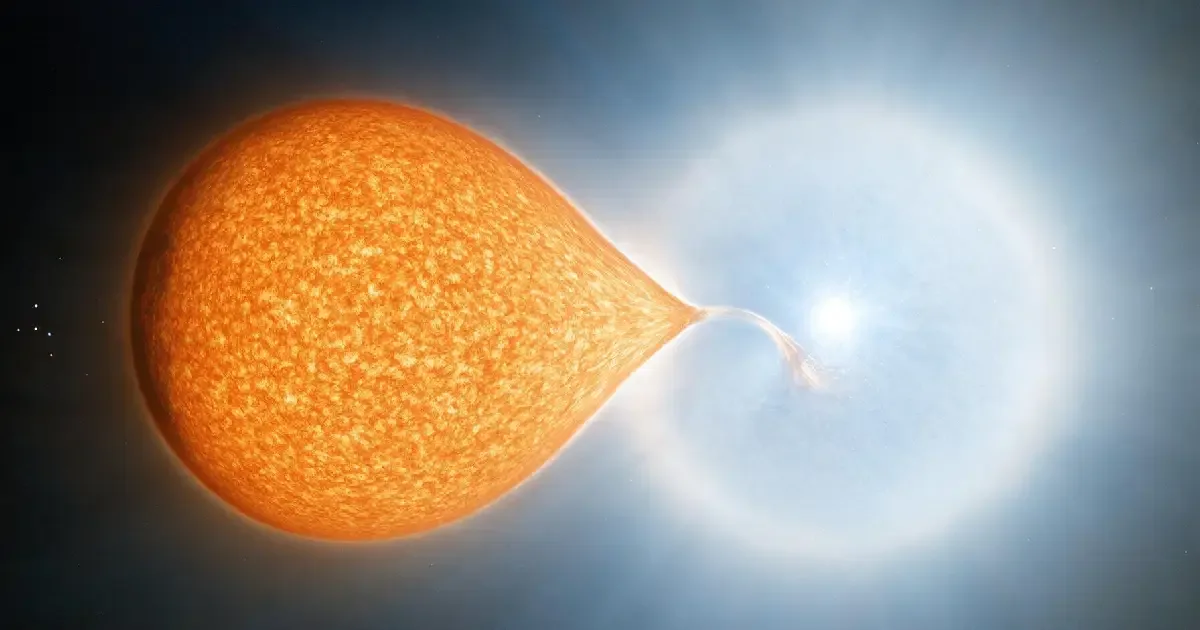
The Carrington Event: Earth's Greatest Solar Storm
In 1859 a solar storm set telegraph wires on fire and lit auroras over the tropics. The unsettling part is how much more we have to lose if it happens again.
At 11:18 on the morning of September 1, 1859, a wealthy young English astronomer named Richard Carrington was doing what he did most clear days: projecting an image of the Sun onto a screen in his private observatory, carefully tracing the dark freckles of a large sunspot group. Then two beads of "intensely bright and white" light flared up inside the spots. Carrington assumed a stray sunbeam had slipped through his equipment. It hadn't. He was watching the first solar flare ever recorded by human eyes — and the leading edge of a storm that, if it arrived today, could switch off a continent.
Here is the thesis worth holding onto: the Carrington Event is usually filed away as a quaint disaster from the age of the telegraph, but that framing gets it exactly backwards. The 1859 storm did little lasting harm precisely because Victorian society had so little electrical infrastructure to lose. We have spent 165 years building the vulnerability the storm was looking for.
Two Astronomers, One Impossible Flash
Carrington was not alone. A few miles away, an amateur astronomer named Richard Hodgson had his own telescope pointed at the same sunspot group and saw the same sudden brightening. The two men had never coordinated, yet both rushed their accounts into print, and their independent reports appeared side by side in the Monthly Notices of the Royal Astronomical Society — the first records of a solar flare in scientific history.
That independent corroboration matters. A single observer describing an unheard-of event is a curiosity; two skilled observers describing it simultaneously is data. It is the reason we can reconstruct the timing of 1859 with a confidence we can rarely apply to pre-instrument history. The flare Carrington sketched lasted only about five minutes, but it flagged the exact moment the Sun launched a coronal mass ejection — a billion-ton cloud of magnetized plasma — straight down the barrel at Earth.
Seventeen Hours That Should Have Taken Days
Most coronal mass ejections dawdle. A typical CME takes anywhere from one to three days to cross the roughly 93 million miles between the Sun and Earth. The 1859 cloud made the trip in about 17 hours, a pace that implies a staggering launch speed and, crucially, suggests an earlier eruption had already swept the path clear of solar wind — letting the main event run downhill almost unopposed.
When it hit, Earth's magnetic field convulsed. Auroras — normally a polar privilege — spilled toward the equator. They were seen in the Caribbean, and a detailed reconstruction of the reports describes the aurora borealis blazing over Colombia, only a few degrees from the equator. In the Rocky Mountains, gold miners reportedly rose and began cooking breakfast at one in the morning, convinced dawn had broken. Newspapers in the northern United States could be read outdoors by aurora-light alone.
There is a useful rule of thumb hiding in that geography: the closer to the equator an aurora is visible, the more violent the storm driving it. A display over the tropics is not a prettier version of the northern lights — it is a warning siren. By that measure, 1859 remains the loudest siren on record.
The Telegraph That Ran on a Ghost
The only widespread electrical technology of 1859 was the telegraph, and it behaved as if possessed. Operators across Europe and North America reported sparks leaping from their equipment and fires breaking out from the sparking gear. Then came the detail that still sounds like folklore but is well documented: some operators disconnected their batteries entirely and kept transmitting, because the storm-induced current in the lines was strong enough to carry their messages on its own.
That is not a charming anecdote. It is a physics demonstration with a modern punchline. A changing magnetic field induces a current in any long conductor sitting inside it — that is simply how electric generators work. In 1859 the longest conductors humans had strung across the landscape were telegraph wires, so that is where the induced current showed up. Ask the obvious follow-up question — what are the longest conductors we have strung across the landscape now? — and the answer is continent-spanning power grids, transcontinental pipelines, and undersea cables. The storm has not changed. Our exposure has multiplied.
Two Rehearsals, and One Very Close Call
We are not speculating about what geomagnetically induced currents do to a modern grid, because we have watched it happen. On March 13, 1989, a far weaker storm than Carrington's induced currents in the Hydro-Québec network that tripped the system in under two minutes, blacking out six million people for about nine hours in the depths of a Canadian winter. That was the grid meeting a storm perhaps half the strength of 1859.
The more sobering rehearsal came on July 23, 2012, when the Sun launched a coronal mass ejection that scientists rate as genuinely Carrington-class. It tore across Earth's orbit — but Earth had already moved on, and the cloud crossed the empty space our planet had occupied roughly a week earlier. The only reason we have detailed measurements of that monster is that NASA's STEREO-A spacecraft happened to be sitting directly in its path and took the full hit. As one NASA scientist put it, if the eruption had come nine days earlier, "Earth would have been in the line of fire".
Sit with what that means. The difference between an ordinary summer and a civilization-scale disaster was the calendar position of a planet — pure orbital timing, nothing we did or could have done. A 2013 analysis put the potential U.S. economic cost of a direct Carrington-class hit at somewhere between $600 billion and $2.6 trillion, with grid repairs stretching from weeks into months in the worst-hit regions.
Here is my own read, offered as opinion rather than fact: the popular fixation on "the next Carrington Event" as a rare, almost mythical catastrophe is quietly dangerous. The 2012 near-miss shows these clouds are not once-a-millennium freaks; they are launched fairly regularly and simply miss us most of the time. With Solar Cycle 25 having already outrun its official forecasts, and with the declining phase of a solar cycle historically producing some of the fiercest storms, the honest framing is not if but when the geometry lines up. What is worth watching over the next few years is less the Sun than the grid — specifically whether utilities install the transformer-protecting hardware that engineers have known how to build for a decade.
Common Questions About the Carrington Event
How often does a Carrington-level solar storm happen?
Estimates vary, but storms of comparable intensity are thought to occur on the order of once every few hundred to five hundred years, with weaker-but-still-damaging storms roughly every 50 years. The 2012 near-miss suggests Carrington-class eruptions may be more frequent than Carrington-class impacts — many are launched; most miss Earth.
Would a modern Carrington Event kill people directly?
Not through radiation at ground level — Earth's atmosphere and magnetic field still shield the surface. The danger is indirect: prolonged, continent-scale blackouts that knock out water pumping, refrigeration, hospitals, banking, and communications for weeks. Airline passengers and astronauts face elevated radiation exposure, and satellites can be damaged or dragged out of orbit.
How much warning would we get?
The flash of light and the burst of radiation arrive at light-speed, giving essentially no warning. But the coronal mass ejection itself takes many hours to days to cross the gap. Spacecraft parked between the Sun and Earth can detect the incoming cloud and provide a lead time of roughly 15 to 60 minutes of precise data — enough for grid operators to take protective action, if they are ready to act.
Could we prevent the damage?
Largely, yes. Utilities can disconnect or reconfigure vulnerable transformers, block the induced currents with protective devices, and reduce grid loading ahead of a forecast storm. The bottleneck is not physics but preparation — installing hardware and rehearsing procedures before the alert, not during it.
The Carrington Event endures because it is the one time nature ran the full experiment and let us read the results at leisure. Carrington and Hodgson caught the trigger; the telegraph wires recorded the impact; 1989 and 2012 supplied the modern translation. The story is finished. Whether we treat it as a warning or a curiosity is the part still being written.
Related Posts
Kepler's Supernova of 1604 and the Blasts Dust Hid Since
Kepler's supernova of 1604 was the last one anyone saw in the Milky Way, but not the last to explode. Here is how dust hid others, and how the next one will be caught.
Saturn's Rings: Far Thinner Than Paper, at Scale
Saturn's main rings span about 273,600 km yet are typically only 10 meters thick. Run the math and the famous paper comparison undersells them by a factor of roughly 10,000.