Blog
In-depth, fact-checked space journalism
 CosmosIn60
In-depth, fact-checked space journalism
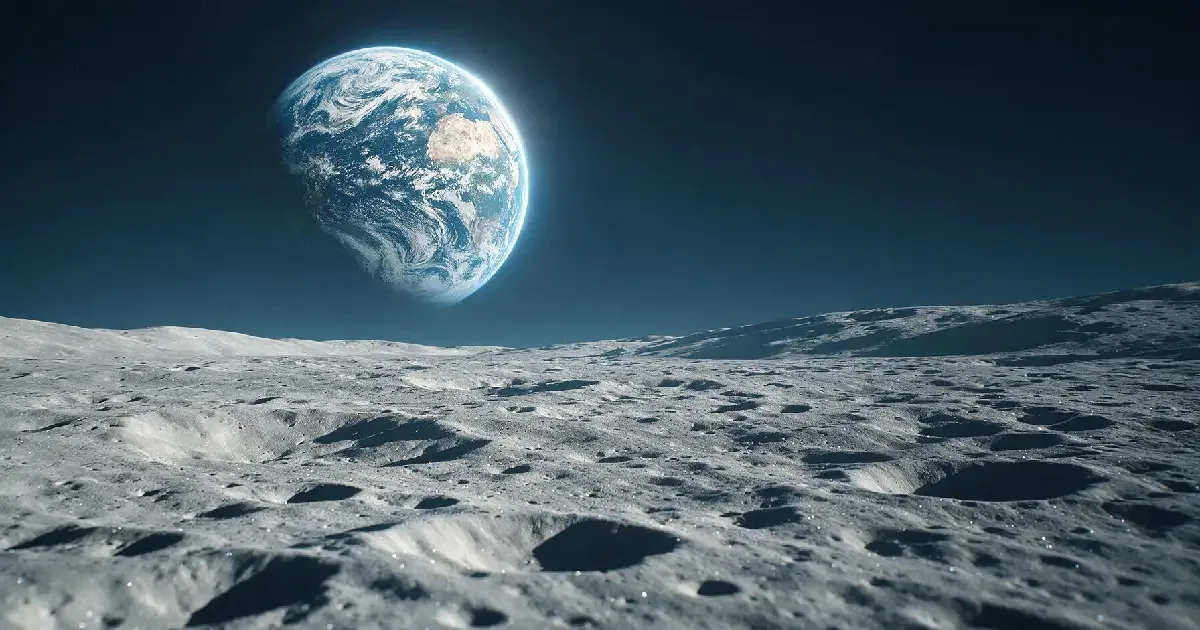
The ashen glow on a thin crescent Moon is sunlight bounced off Earth. Decades of measuring that earthshine revealed something unsettling: the planet is reflecting less light.

In 1859 a solar storm set telegraph wires on fire and lit auroras over the tropics. The unsettling part is how much more we have to lose if it happens again.

On July 17, 2026, a 3-day-old crescent Moon pairs with brilliant Venus in the western twilight. They look like neighbors. They are separated by 139 million kilometres.

JWST picked up a possible dimethyl sulfide signal on K2-18b — but a tentative, contested 3-sigma whisper is not confirmed alien life. Here is what the data actually shows.

Mars was never a dead rock. NASA's MAVEN orbiter, declared lost in June 2026, caught the Sun stripping Mars's air in the act — and tied that theft to vanished oceans.

For the first time, the James Webb Space Telescope has directly characterized the surface of a rocky exoplanet, and what it found is a dark, basalt-covered world with no atmosphere — eerily similar to the Moon.

Earth leaks roughly 3 kg of hydrogen every second into space. It always has. Here's why that slow bleed is the difference between a living world and a dead one.

NASA's James Webb Space Telescope detected methane and carbon dioxide in the atmosphere of K2-18b — a temperate sub-Neptune 120 light-years away that may harbor a global ocean.

A growing dent in Earth's magnetic shield is frying satellites and splitting in two. Here's what the South Atlantic Anomaly really means for our planet.

NASA's Dragonfly rotorcraft launches in 2028 toward Saturn's moon Titan — a world with methane lakes, a buried ocean, and chemistry that mirrors early Earth.

Around 42,000 years ago, Earth's magnetic field dropped to just 5% of its current strength. Here's what happened to the planet — and to us.

The SMILE satellite is set to launch May 19, 2026, and will capture the first-ever global X-ray image of Earth's magnetosphere — the invisible shield that keeps life on Earth alive.

JWST data suggests LHS 1140b may be a nitrogen-rich water world with a liquid ocean — making it the most promising habitable-zone exoplanet ever found.

For the first time since Apollo, humans flew behind the Moon — and witnessed a 57-minute total solar eclipse unlike anything ever seen from Earth.

A Jupiter-sized planet orbiting a tiny M-dwarf star defies everything we know about planet formation — and JWST's atmospheric findings make it even stranger.

Those shimmering green curtains in the sky look peaceful — but they're caused by the Sun bombarding Earth with billions of charged particles. Here's the violent physics behind the northern lights.

New Juno data reveals Jupiter's lightning bolts may reach a million times the power of Earth's — fueled by ammonia storms over 100 km tall.