 CosmosIn60CosmosIn60

For the first time since Apollo, humans flew behind the Moon — and witnessed a 57-minute total solar eclipse unlike anything ever seen from Earth.
On April 6, 2026, four humans flew behind the Moon for the first time in 54 years — and watched the Sun disappear. What followed was 57 uninterrupted minutes of total solar eclipse, a spectacle so alien that even the astronauts who trained for it struggled to process what they were seeing. Reid Wiseman, Victor Glover, Christina Koch, and CSA astronaut Jeremy Hansen did not just set records on the Artemis II mission. They witnessed something that no instrument, no telescope, and no unmanned spacecraft could have captured the same way: a total solar eclipse as seen from the far side of the Moon, with human eyes.
The Artemis II mission launched on April 1, 2026, aboard NASA's Space Launch System from Kennedy Space Center Launch Complex 39B. The Orion spacecraft, named Integrity by its crew, carried four astronauts on a free-return trajectory around the Moon — no orbital insertion, no landing, but a precisely calculated slingshot that would take them farther from Earth than any human had traveled in over five decades.
The mission was the first crewed flight of the Artemis program and the first human journey beyond low Earth orbit since Apollo 17 in December 1972. It was not designed to land — that milestone is reserved for Artemis IV, currently targeting 2028. Artemis II's purpose was to prove the Orion spacecraft and its life-support systems could safely carry humans on a deep-space trajectory, validate communication systems, and — quietly — give scientists an unprecedented human-operated observing platform around the Moon.
The crew spent six hours photographing and documenting the lunar surface during their approach, conducting the most detailed human visual survey of the Moon since the final Apollo missions. Then came the flyby itself, and the eclipse that would redefine the outer limit of what humans have experienced in space.
Before the eclipse could begin, Integrity had to disappear entirely from contact with Earth. At 6:44 p.m. EDT on April 6, the Orion spacecraft passed behind the Moon and entered a planned 40-minute communications blackout — one of the longest loss-of-signal periods in crewed spaceflight history. The lunar surface physically blocked all radio signals from NASA's Deep Space Network. Mission controllers in Houston could do nothing but wait.
For the crew, those 40 minutes were among the most psychologically charged in the entire mission. They were the first humans ever to see the full disk of the Moon's far side with their own eyes — a landscape of ancient, unnamed craters and uncharted terrain that robotic spacecraft have photographed but no human had ever witnessed directly. Jeremy Hansen described one plateau showing "unique, greenish hues" that he said looked like nothing else on the near side. The Moon's far side lacks the vast dark volcanic maria that cover the Earth-facing hemisphere, making it geologically distinct — and in Hansen's words, entirely unlike what they had seen on approach.
When Integrity re-emerged from behind the Moon at 7:25 p.m. EDT and communication was restored, the crew had less than two hours before the main event.
At 8:35 p.m. EDT, the Sun slipped behind the Moon from the crew's vantage point, and totality began. It lasted until 9:32 p.m. EDT — 57 consecutive minutes of the Sun completely obscured by the lunar disk.
For context: the longest total solar eclipse ever recorded from Earth's surface lasted 7 minutes and 31 seconds. The one that crossed North America on April 8, 2024, gave most observers less than 4 minutes of totality. From behind the Moon, the Artemis II crew had more than 14 times that duration — because the geometry is fundamentally different. The Moon's shadow as cast onto Earth is a narrow cone. But behind the Moon, the entire solar disk sits neatly occluded by the lunar body, and the spacecraft moves slowly enough that the Sun stays hidden for the better part of an hour.
Commander Reid Wiseman later described the moment: "When the sun eclipsed behind the moon, I said, 'I don't think humanity has evolved to the point of being able to comprehend what we were looking at right now,' because it was otherworldly." He added: "No matter how long we look at this, our brains are not processing this image in front of us." Victor Glover echoed that sentiment, telling reporters the eclipse "just blew all of us away."
What made it visually extraordinary was the solar corona — the Sun's outermost atmosphere — blazing as a white halo around the Moon's entire rim. The corona, normally invisible in daylight, appeared as a luminous ring surrounding absolute darkness. Stars and planets became visible in the black sky around it: Venus, Mars, Saturn, and Mercury all emerged simultaneously alongside the corona's glow.
The eclipse was not merely an aesthetic experience. The crew had been briefed on a list of scientific observations to attempt during totality, and they executed them systematically.
The first target was earthshine — sunlight reflected from Earth onto the lunar surface. With the Sun blocked, the Moon's nearside became faintly visible, lit only by the blue-white glow of Earth hanging above the crew's heads. Glover reported: "Seconds after the sun set behind the moon, you can see earthshine — Earth is so bright out there." The Moon appeared as what he called "a black orb," its dark outline barely traceable against the ring of corona light.
The second target was meteoroid impact flashes. When micrometeorites strike the Moon's airless surface, they vaporize instantly in a brief burst of light — visible only when the surrounding terrain is dim. During the 57 minutes of totality, the crew observed at least five to six such impact flashes glowing against the earthshine-illuminated terrain. Each one was documented. These observations feed directly into models of the current meteoroid bombardment rate across the inner solar system — data that robotic missions positioned behind the Moon cannot easily gather because none are stationed there.
The crew also documented the corona itself, capturing images for solar physicists studying the structure of the Sun's outer atmosphere. During a total eclipse, the corona's fine structure — streamers, loops, and prominence arcs — becomes visible in a way that even space-based coronagraphs cannot fully replicate because of instrument occlusion limitations.
The eclipse was the headline observation, but April 6 also delivered a second milestone. At 1:57 p.m. EDT, the crew of Integrity surpassed 248,655 miles from Earth — the record set by the Apollo 13 crew in April 1970 as their damaged spacecraft looped around the Moon on a survival trajectory. Artemis II ultimately reached a maximum distance of 252,756 miles (406,771 km) from Earth, approximately 4,100 miles farther than the Apollo 13 record that had stood for 56 years.
The Apollo 13 record was broken under desperation. The crew of Lovell, Swigert, and Haise were fighting to stay alive after an oxygen tank explosion. Artemis II broke it deliberately, under controlled conditions, aboard a spacecraft that then returned its crew safely to a splashdown off the coast of San Diego on April 10, 2026.
The Artemis II eclipse is more than an anecdote for the mission history books. It represents something that space agencies have quietly understood for years but rarely stated publicly: human observers offer a form of scientific flexibility that no robotic mission can match.
When the crew spotted the green-tinged plateau on the lunar far side, or counted impact flashes in real time and directed cameras toward them, or instinctively adjusted framing to capture the corona's shape — those were decisions made in milliseconds by trained human eyes and brains operating at the scene. A robotic orbiter following a preprogrammed observation sequence would have missed several of them entirely.
The 57-minute eclipse also served as a proof of concept for what the Moon can offer as a scientific platform. Future crewed missions — including the Artemis IV lunar landing now targeted for 2028 — will place humans on the surface. An astronaut standing in the lunar night during a solar eclipse would have hours, not minutes, of uninterrupted observing time for the corona, earthshine photometry, and impact flash surveys. Artemis II demonstrated that this is not a theoretical exercise. Humans can do this science, in this environment, reliably.
There is also the purely human dimension. For 54 years, no person had left low Earth orbit. The two generations born since Apollo have lived their entire lives in a world where humans did not go to the Moon. Artemis II changed that. And it did so with an image that is difficult to convey in numbers: four humans, impossibly far from home, watching the Sun vanish behind the body that has defined night for every civilization in human history.
The Artemis II crew experienced 57 minutes of total solar eclipse — from 8:35 p.m. to 9:32 p.m. EDT on April 6, 2026. The longest possible total solar eclipse visible from Earth's surface lasts about 7 minutes and 31 seconds. Most viewers of the 2024 North American eclipse saw fewer than 4 minutes of totality.
From Earth, you are standing in the narrow tip of the Moon's shadow cone — a small, fast-moving region. From behind the Moon, the spacecraft sits on the far side of the occulting body itself, directly behind the disk that is blocking the Sun. The geometry means the Sun stays hidden for the full duration of the spacecraft's passage through that region of deep shadow, which in Artemis II's case was nearly an hour.
The mission set the record for the farthest distance any humans have traveled from Earth, reaching 252,756 miles (406,771 km) — surpassing the previous record of 248,655 miles set by Apollo 13 in 1970. It was also the first crewed mission beyond low Earth orbit since Apollo 17 in December 1972.
The crew documented earthshine (reflected Earth light on the lunar surface), observed five to six meteoroid impact flashes on the darkened Moon, photographed the solar corona for solar physicists, and imaged the lunar far side terrain — including geologically unusual surface features that may inform future landing site selection.
Artemis III (targeting 2027) will test rendezvous and docking procedures with commercial lunar landers in Earth orbit. The first crewed lunar landing since Apollo 17 is currently planned for Artemis IV in 2028, using either SpaceX's Starship HLS or Blue Origin's Blue Moon lander.
Artemis II returned its crew to Earth on April 10, 2026, and in doing so quietly closed a 54-year gap in human deep-space experience. The mission's eclipse observations have already begun informing solar physicists and lunar scientists, but their deeper significance may take years to fully digest. The question now is not whether humans can survive a journey to the Moon — Artemis II answered that — but what they will find when they actually land. Artemis IV is targeting 2028. The Moon will not look the same to the people who walk on it as it did to those who merely flew past. What will they see when the Sun sets on the lunar surface, and they are standing in it?

In 1859 a solar storm set telegraph wires on fire and lit auroras over the tropics. The unsettling part is how much more we have to lose if it happens again.
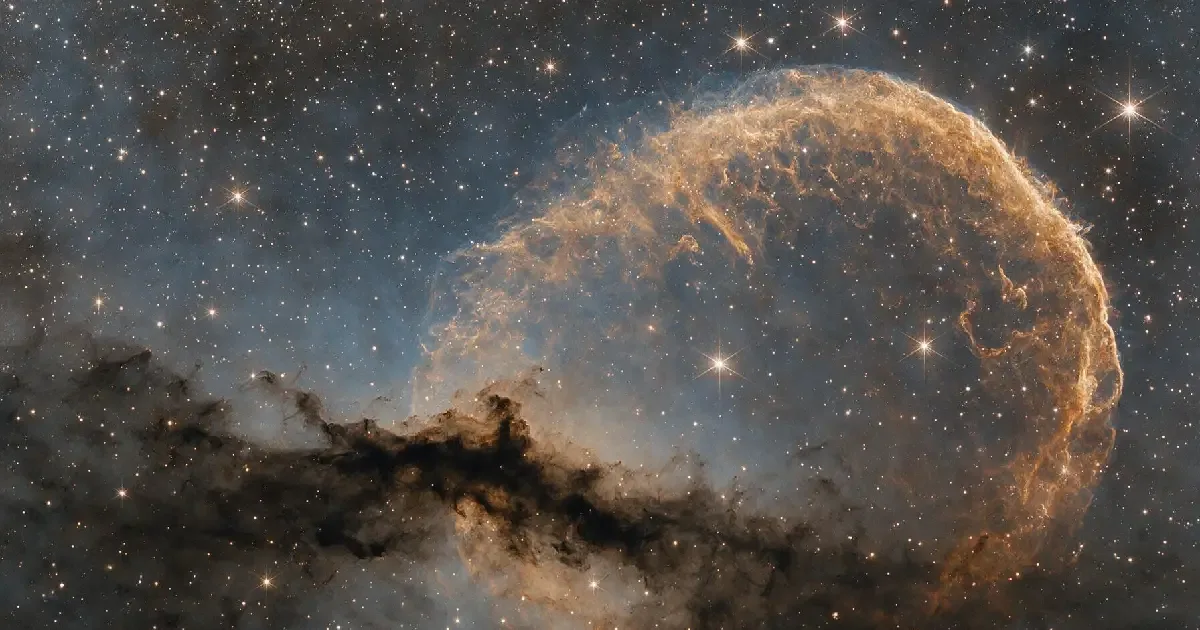
Kepler's supernova of 1604 was the last one anyone saw in the Milky Way, but not the last to explode. Here is how dust hid others, and how the next one will be caught.
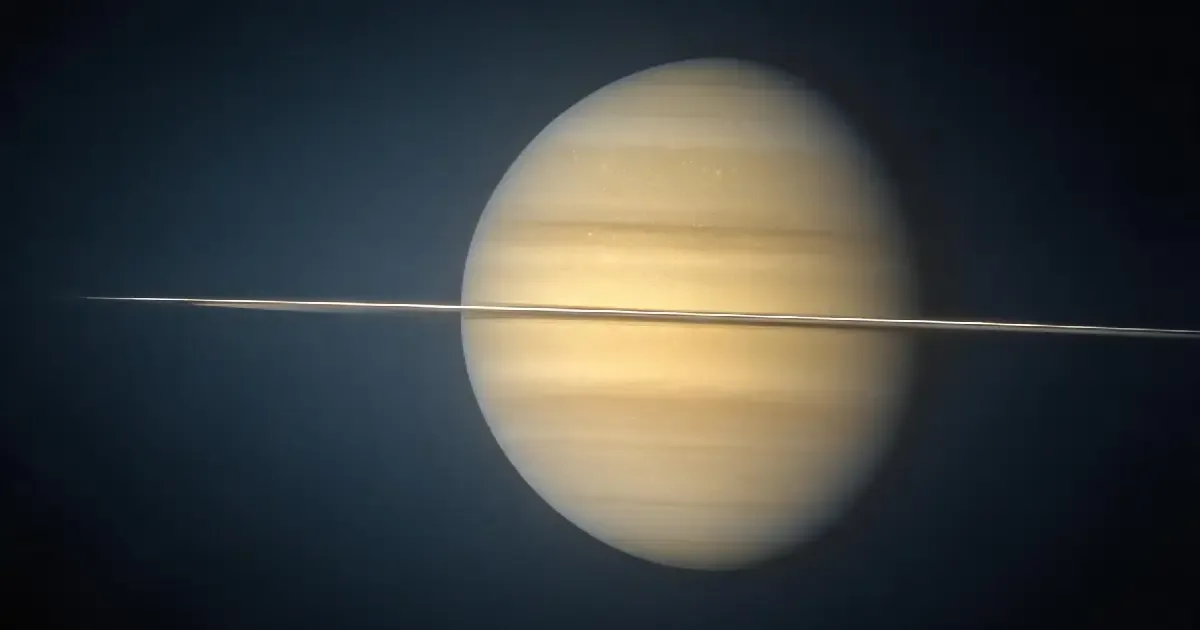
Saturn's main rings span about 273,600 km yet are typically only 10 meters thick. Run the math and the famous paper comparison undersells them by a factor of roughly 10,000.